
California’s SB 343: What It Means for Packaging, Labeling, and Food Brands
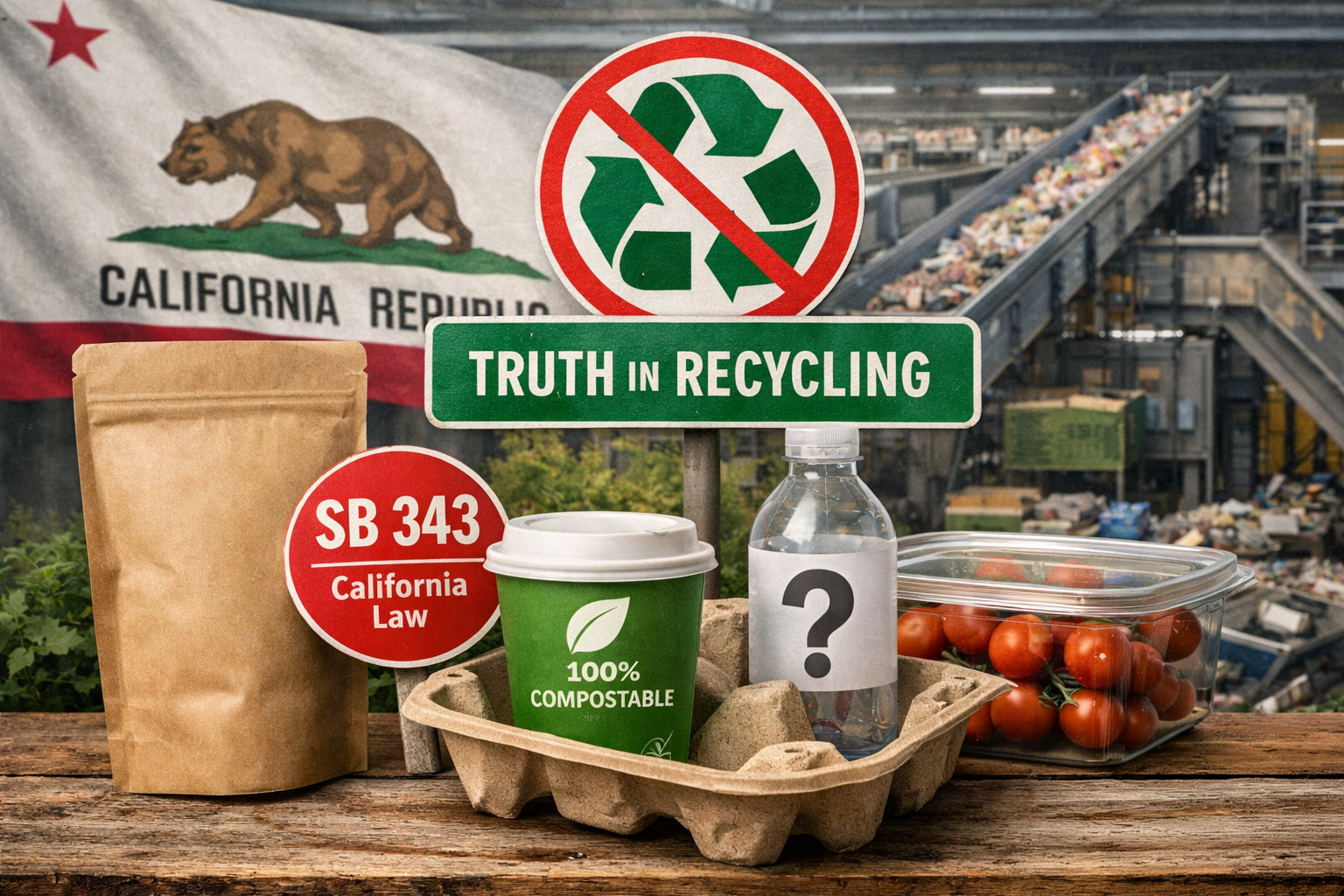
With SB 343 enforcement beginning October 4, 2026, California is tightening the rules around recyclability claims.
California has once again raised the bar on environmental labeling with Senate Bill 343, often referred to as the “Truth in Recycling” law. While the name sounds straightforward, the implications for manufacturers and food brands are significant. At its core, SB 343 restricts the use of the familiar “chasing arrows” recycling symbol and other recyclability claims on packaging sold in California unless those claims can be clearly substantiated under strict statewide criteria.
The law was signed in 2021, but the real compliance clock started ticking after CalRecycle released its final material characterization study on April 4, 2025. That publication triggered an 18-month transition period, meaning enforcement begins on October 4, 2026. For products and packaging manufactured after October 4, 2026, recyclability claims must meet the state’s thresholds. Items manufactured before that date are not subject to the new labeling restrictions, regardless of when they are sold.
So what qualifies as “recyclable” under SB 343? The material must be collected through recycling programs serving at least 60 percent of Californians and sorted into defined recycling streams by facilities serving the same threshold. It also needs to routinely become feedstock used in the manufacturing of new products. In other words, it is not enough for a material to be technically recyclable in theory. It must be recyclable in practice, at scale, within California’s infrastructure.
For food manufacturers, this shifts packaging decisions from a marketing exercise to a compliance priority. Claims that once seemed harmless can now carry legal risk. Beyond potential enforcement, there is also reputational exposure. Consumers and regulators alike are paying closer attention to greenwashing, and SB 343 gives California a clear enforcement framework to challenge unsupported environmental claims.
This is where thoughtful packaging strategy becomes essential. Companies that proactively evaluate their materials, labeling language, and documentation now will be in a much stronger position well before the 2026 deadline. It is also worth considering how packaging choices intersect with broader environmental regulations and potential EPA-related liability or fees tied to waste management and extended producer responsibility frameworks.
Organizations like Portco work with food brands to engineer flexible packaging solutions that align with both performance and regulatory requirements. Our sustainability-focused line, EarthGuard Solutions (https://www.earthguard.solutions/), offers recyclable, compostable, and post-consumer recycled material options designed to help manufacturers move toward practical recyclability while managing environmental exposure. While SB 343 is specific to California labeling, the broader shift it represents is national in scope. For example, EPR laws are already active in both Oregon and Colorado. Brands that invest now in materials that are truly recyclable within existing systems will not only reduce risk but also strengthen trust with consumers who increasingly expect transparency.
The takeaway is simple. SB 343 is not just about a symbol on a package. It is about aligning packaging claims with real-world recycling outcomes. With the October 4, 2026 enforcement date fast approaching, now is the time for manufacturers to review packaging portfolios, validate claims, and make any necessary adjustments. California has drawn a clear line. The companies that respond early will be the ones best positioned to lead.
♻️ Want to learn more about sustainable packaging options for your business? Visit Portco.com or explore here at EarthGuard.Solutions to explore packaging solutions that protect your products AND the planet!
